At some point between the last mild Sunday and the first frost, it happens. The last ride of the season is done, the roads are covered in leaves and grit, and the bike is going to sit for a few months. What you do now is what you notice in spring: a bike that starts on the first press, or a flat battery and tyres with a flat spot.
This checklist covers the steps most riders follow when they lay a bike up. Every bike is different, though. A carburettor wants different care from fuel injection, and a lithium battery different care from a lead-acid one. Your owner’s manual and your dealer always have the final word.
1. Clean it before you park it
Dirt holds moisture, and road salt keeps working for as long as it sits on the metal. Give the bike a proper wash before it goes into storage: the wheels, the underside, behind the fairing and around the brakes. Use cold or lukewarm water. Hot water does not shift salt any better; if anything it helps it corrode faster.
Then dry it, properly. A ten minute ride or a leaf blower gets the water out of the corners a cloth can’t reach. After that, protect bare metal with a product made for the job, and keep it well away from the brake discs, the pads and the tyres.
2. The chain
A clean, lubed chain won’t seize up in the garage. Clean it after the wash, let it dry, then lube it, turning the rear wheel so every link gets some. If your bike has a shaft or a belt, skip this step, but check what the manual says about that drive.
3. The battery
A battery slowly drains over winter even with the bike switched off, and a fully flat battery can be damaged for good. There are two common ways to avoid that.
- Leave the battery in the bike and connect it to a smart maintenance charger that regulates itself and won’t overcharge.
- Or take the battery out, charge it fully and keep it somewhere dry and frost-free. Top it up now and then.
Lithium batteries often need their own charger or their own rules, so check which type you have before you clip anything onto it.
4. Fuel
This is where advice differs the most, which is why the manual matters most here. Plenty of riders fill the tank to the brim, so there’s little air inside for condensation to form, and add a fuel stabiliser. Then they run the engine for a few minutes so the treated fuel reaches the lines and the injection or carburettor. Some makers advise draining the float bowl on a carburettor bike instead. Do what applies to yours.
5. Oil and coolant
Used oil carries acids and dirt. That’s why many riders change the oil before storage rather than in spring. If a service is due soon anyway, now is a good time. Check that your coolant is rated for frost too, especially in an unheated garage.
6. Tyres
A bike that stands in the same spot for months can press flat spots into its tyres. Pump them up to the pressure the maker gives; the cold will drop it a little on its own. Then put the bike on a centre stand or a paddock stand to take the weight off. No stand? Roll it forward a little every few weeks so a different patch of tyre sits on the ground.
7. A dry place
An unheated garage beats the outdoors. Dry and slightly ventilated matters most, because damp does more harm than cold. Keep the bike away from a tumble dryer and out of the way of car doors and bicycles. Mice like a quiet garage, and a rag stuffed in the exhaust keeps them out, as long as you remember to pull it before the first ride. A note on the handlebar takes care of that.
8. The cover
Indoors, use a breathable cover that keeps the dust off and lets moisture out. A plastic sheet traps condensation, which is exactly what you don’t want. If the bike has to stay outside, pick a cover that is both waterproof and breathable. Only put it on once the bike is dry and cooled down.
The checklist at a glance
- Wash with cold or lukewarm water, dry thoroughly, protect bare metal (never on brakes or tyres)
- Clean and lube the chain
- Battery on a maintenance charger, or out and stored frost-free
- Fuel as the manual says, often a full tank with a stabiliser
- Change the oil and check the coolant, if the manual recommends it
- Tyres at the right pressure, bike on a stand
- A dry, ventilated spot, the exhaust plugged against mice, a note on the handlebar
- A breathable cover, on a dry bike only
And the rule above all the others: check your owner’s manual or ask your dealer. What applies to your bike always beats a general list.
Meanwhile, plan the spring
The bike is parked, but nothing stops you riding in your head. A winter evening is a good time to look for spring routes, with no pressure to head out tomorrow.
On Motarva you can browse routes that riders drew and shared themselves, on the map or in the route list. When you find one you want to ride in April, save it to a collection: your own list on your profile, with a name like “Spring 2027” or “First ride out”. Browsing needs no account; saving and downloading need a free account.
Rather draw your own? The route planner lets you plot a loop and shows the distance, the expected ride time and the elevation profile while you plan. Your first ride of the season is ready before the bike is.
Want it all on your phone? The Motarva app for iPhone is free to download from the App Store.
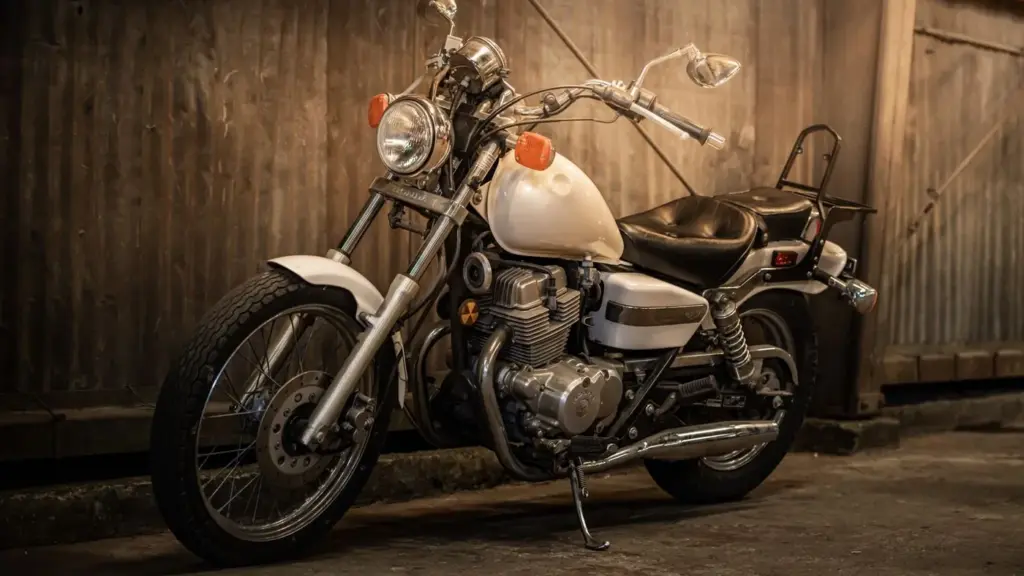
Photo: Tyler Clemmensen / Pexels